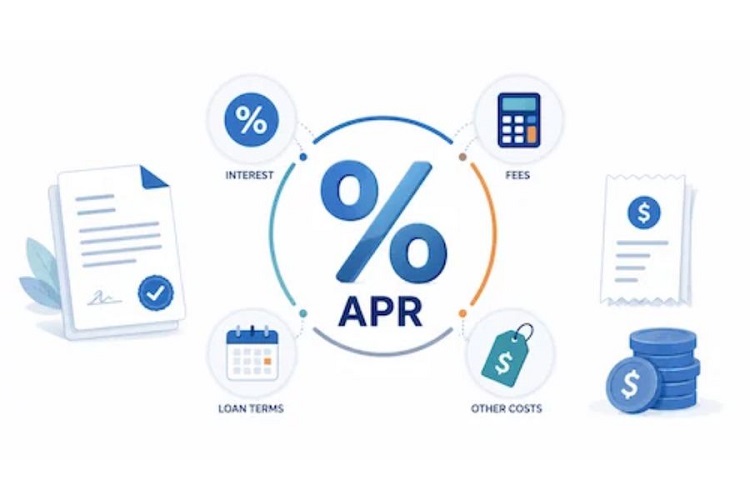
A major home improvement project can get expensive quickly. A new roof, replacement windows, kitchen remodel, HVAC system, bathroom renovation, or exterior siding project can easily run into thousands of dollars. For homeowners who don't want to drain their savings, 0% APR home improvement financing can look like an attractive way to spread the cost over time without paying interest.
But there's an important catch: 0% APR financing is rarely as simple as "free money."
These offers usually come with a promotional period, eligibility requirements, minimum payments, financing fees in some cases, and specific rules about what happens when the promotional period ends. Some offers use deferred interest, which can be particularly expensive if the balance isn't paid according to the terms.
For homeowners comparing financing options, the key question isn't simply whether a lender advertises 0% APR. It's whether you can realistically repay the entire project within the promotional period without putting your household finances under unnecessary pressure.
This guide explains how 0% APR home improvement financing works, where homeowners can find it, what to watch for, and when another financing option may make more sense.
What Is 0% APR Home Improvement Financing?
0% APR financing means you aren't charged an annual percentage rate on qualifying purchases during a specified promotional period.
For example, suppose you finance a $12,000 kitchen renovation with a 12-month 0% APR promotion.
If the financing truly carries no interest during those 12 months and there are no additional financing charges, paying $1,000 per month would allow you to eliminate the balance before the promotional period expires.
The important words are "during the promotional period."
A 0% offer might last:
- 6 months
- 12 months
- 18 months
- 24 months
- 36 months
The actual terms vary considerably between lenders, credit cards, contractors, and financing companies.
Once the promotional period ends, the standard APR may apply to the remaining balance.
How Does 0% APR Financing Work?
There are several different structures homeowners may encounter.
The first is a genuine introductory APR offer.
You make qualifying purchases at 0% APR for a specified period. Interest isn't charged during that period, although minimum payments are generally still required.
The second is deferred-interest financing.
This is where homeowners need to be particularly careful.
With deferred interest, interest may technically accrue during the promotional period but isn't charged immediately. If you fail to satisfy the promotional terms, the lender may add some or all of that accumulated interest to your account.
Those two offers can look almost identical in an advertisement.
They aren't.
0% APR vs. Deferred Interest
Understanding this distinction can save homeowners thousands of dollars.
True 0% APR
With a genuine 0% APR promotion:
- Interest isn't charged during the promotional period.
- You still have to make required minimum payments.
- The remaining balance generally begins accruing interest at the regular APR after the promotion ends.
Deferred Interest
With deferred-interest financing:
- Interest may accumulate during the promotional period.
- Paying only the minimum may not eliminate the balance.
- Missing the promotional deadline can result in significant interest charges depending on the agreement.
Before signing anything, ask the financing provider a very direct question:
"If I still have a balance when the promotional period ends, will I be charged interest retroactively on the original purchase?"
If the answer is yes, read the agreement extremely carefully.
Where Can You Find 0% Home Improvement Financing?
Homeowners generally encounter these offers through several channels.
Home Improvement Credit Cards
Some credit cards offer introductory 0% APR periods that can be used for qualifying purchases.
This can provide flexibility because you aren't necessarily restricted to one contractor.
However, approval depends on the issuer's underwriting criteria, and the regular APR after the introductory period can be considerably higher.
Contractor Financing
Some roofing contractors, window companies, HVAC installers, kitchen remodelers, and other home improvement businesses offer financing directly through third-party financing providers.
A contractor might advertise:
"0% financing for 12 months."
The contractor isn't necessarily the actual lender. Financing may be provided through a separate financial institution.
Always ask who is providing the credit and request the complete terms before agreeing to the project.
Manufacturer Financing
Certain manufacturers or retailers may offer promotional financing for specific products.
This is common for categories such as:
- HVAC systems
- Replacement windows
- Appliances
- Roofing products
- Solar equipment
- Flooring
The promotional terms can vary significantly.
Personal Loans
Traditional personal loans generally aren't 0% APR, although they can provide predictable fixed payments and longer repayment periods.
They're worth comparing when a project is too large to repay within a short promotional period.
What Home Improvements Can You Finance?
The eligible projects depend on the financing provider, but common examples include:
- Kitchen remodeling
- Bathroom remodeling
- Roof replacement
- Siding replacement
- Window replacement
- HVAC installation
- Flooring
- Solar installation
- Exterior painting
- Gutter installation
- Deck construction
- Landscaping
- Accessibility modifications
- Storm damage repair
Some financing programs are specifically designed for particular types of residential construction or remodeling.
For example, a roofing contractor may have access to a financing program that wouldn't necessarily be available for a homeowner purchasing materials independently.
How Much Can You Finance at 0% APR?
There's no universal maximum.
The amount you can finance depends on the particular product and your credit profile.
A homeowner might receive a promotional financing offer for a relatively small purchase, while another qualified borrower may have access to a significantly larger credit line.
Your available financing can depend on:
- Credit score
- Income
- Existing debt
- Credit history
- Debt-to-income ratio
- Lender policies
- Project cost
- Available credit limit
Don't assume that being approved for financing means the project is affordable.
That's an important distinction.
A lender evaluates whether you're likely to repay the debt. You need to evaluate whether the payment fits comfortably within your household budget.
Calculate the Payment Before Starting the Project
This is one of the simplest ways to avoid problems.
Suppose your renovation costs $18,000 and you receive a genuine 0% APR promotion lasting 18 months.
The basic monthly target would be:
$18,000 ÷ 18 = $1,000 per month
That means you should think in terms of a $1,000 monthly commitment rather than "I'm getting a $18,000 renovation at 0%."
If that payment would strain your budget, the financing isn't necessarily a good deal.
The situation becomes even more important when the project includes unexpected expenses.
A roof replacement, for example, can reveal damaged decking or structural problems once the old roofing materials are removed.
Likewise, exterior remodeling projects can uncover moisture damage, deteriorated sheathing, or inadequate waterproofing.
Build a contingency fund instead of assuming the contractor's initial estimate will always be the final price.
Contractor Quotes Matter
Never evaluate financing separately from the project price.
A contractor may advertise attractive financing while charging a higher project price than another contractor offering conventional payment terms.
Get several contractor quotes.
Compare:
- Total project price
- Materials
- Labor
- Warranty
- Project timeline
- Financing APR
- Promotional period
- Financing fees
- Post-promotion APR
- Early payoff terms
For a roofing project, for example, don't compare financing alone.
Compare the complete roof replacement cost, including:
- Tear-off
- Underlayment
- Shingles or other roofing materials
- Flashing
- Ventilation
- Decking repairs
- Labor
- Disposal
- Permits
- Warranty
The lowest monthly payment doesn't necessarily represent the lowest overall cost.
What Happens When 0% APR Ends?
This is where many homeowners make mistakes.
Let's say you finance $15,000 for 12 months at 0% APR.
You make payments totaling $10,000 during the promotional period.
You still owe $5,000.
If the regular APR after the promotion is 25%, the remaining balance can become expensive quickly.
That's why homeowners should work backward from the promotional deadline.
Don't wait until month 12 to figure out how you'll pay the remaining balance.
Create a Payoff Schedule
If you have a 0% promotional period, treat it like a deadline.
For example:
Project cost: $15,000
Promotion: 15 months
Target monthly payment: $1,000
Even if the lender requires only a smaller minimum payment, paying $1,000 each month keeps you on track to eliminate the debt before the promotional period expires.
An automated payment can help prevent accidental missed payments.
Advantages of 0% APR Financing
You Can Preserve Cash Reserves
Instead of spending $15,000 from your savings immediately, you can spread the expense over the promotional period.
That can be particularly useful when homeowners want to maintain an emergency fund.
No Interest During the Promotional Period
If the terms genuinely provide 0% APR, you can potentially reduce the financing cost substantially compared with a conventional loan.
Immediate Repairs
Financing can make it possible to address urgent problems before they become significantly more expensive.
This matters particularly for:
- Roof leaks
- Storm damage
- Failed HVAC systems
- Water intrusion
- Broken windows
- Electrical problems
Delaying essential repairs can sometimes result in additional property damage.
Potentially Better Cash Flow
A predictable monthly payment can make a large project easier to manage.
However, cash flow benefits only exist if the payment remains comfortably affordable.
Disadvantages of 0% APR Financing
Promotional Periods Are Limited
A $20,000 project can be difficult to repay within 12 months.
Don't let the phrase "0% APR" distract you from the repayment deadline.
High APR After Promotion
The standard APR can be significantly higher once the promotional period ends.
Credit Requirements
The most attractive offers may require strong credit.
Potential Fees
Some financing products include account fees, origination charges, or other costs.
Always compare the total cost rather than focusing only on the advertised APR.
Temptation to Overspend
This is perhaps the most overlooked problem.
When a project feels "interest-free," homeowners may choose premium materials or add features they wouldn't otherwise purchase.
Financing should make an affordable project easier to pay for—not make an unaffordable project appear affordable.
Is 0% APR Better Than a Home Equity Loan?
Not automatically.
A home equity loan typically provides a larger amount of financing and a longer repayment period, but interest is charged.
A 0% APR promotion may be cheaper if you can repay the balance before the promotional period ends.
A home equity loan may be more appropriate when:
- The project is very expensive.
- You need several years to repay it.
- You want predictable long-term payments.
- You need a larger amount than a promotional credit line provides.
However, home equity financing uses your home as collateral, so homeowners should understand the risks before proceeding.
What About a HELOC?
A home equity line of credit, or HELOC, allows homeowners to borrow against available home equity.
Unlike a fixed home improvement loan, a HELOC typically provides a revolving line of credit.
It can be useful for large renovation projects where costs are uncertain.
For example, a homeowner planning extensive exterior remodeling might discover additional work involving:
- Structural repairs
- Waterproofing
- Insulation upgrades
- Siding replacement
- Window replacement
- Storm damage repair
A HELOC can provide flexibility, but its interest rate may be variable.
That's very different from a genuine 0% APR promotion.
When 0% APR Financing Makes the Most Sense
This type of financing tends to work best when three conditions are present:
First: The project is necessary or well planned.
Second: You can comfortably repay the entire balance during the promotional period.
Third: The total project price is competitive with other contractors.
For example, if you have a $9,000 window replacement project and can comfortably pay $750 per month for 12 months, a genuine 0% APR offer may be attractive.
If the project costs $30,000 and the promotional period lasts only 12 months, the required $2,500 monthly payment may make the financing impractical.
When You Should Probably Avoid It
Consider another financing option if you would need to make minimum payments for most of the promotional period.
You should also be cautious if:
- Your income is unstable.
- You have substantial existing credit card debt.
- You don't have emergency savings.
- The project isn't urgent.
- You haven't compared contractor quotes.
- You're relying on a future bonus to repay the balance.
- The project cost is likely to increase significantly.
A financing offer can be attractive on paper while creating financial stress in practice.
Does Home Improvement Financing Affect Your Credit?
Applying for financing can affect your credit depending on the lender and whether the application generates a hard inquiry.
Opening a new account can also affect your credit profile.
Potential factors include:
- New credit inquiry
- New account age
- Credit utilization
- Payment history
- Total outstanding debt
The impact varies by individual circumstances.
Most importantly, make every required payment on time. Missing payments can have consequences that extend well beyond the original renovation project.
Can Home Improvements Increase Home Equity?
Yes, certain improvements can contribute to increased home value and therefore potentially increase home equity.
But not every renovation provides the same return.
Projects that improve:
- Functional space
- Energy efficiency
- Structural condition
- Curb appeal
- Kitchen quality
- Bathroom quality
- Roof condition
can be particularly valuable.
For example, replacing failing siding or an aging roof may not feel as exciting as installing a luxury kitchen, but maintaining the home's exterior protects the underlying property and can influence buyer perception.
Financing Improvements That Protect Your Home
Some projects should be viewed less as cosmetic upgrades and more as property preservation.
Examples include:
Roof Replacement
A deteriorating roof can allow water into the structure, damaging insulation, drywall, framing, and personal property.
Siding Replacement
Damaged siding can expose exterior walls to moisture and weather.
Gutter Installation
Proper drainage helps direct water away from the foundation.
Window Replacement
New windows can improve comfort, energy efficiency, and exterior appearance.
Waterproofing
Basement and foundation waterproofing can address moisture before it develops into a larger structural problem.
These projects may not always deliver the same immediate emotional payoff as a kitchen renovation, but they can be important investments in the home's long-term condition.
Questions to Ask Before Signing
Before accepting a 0% APR financing offer, ask the lender or contractor:
- Is this true 0% APR or deferred-interest financing?
- How long does the promotional period last?
- What is the regular APR afterward?
- What happens if I still have a balance at the end?
- Is there an annual fee?
- Is there an origination fee?
- Is there a prepayment penalty?
- What is the minimum monthly payment?
- Who is the actual financing company?
- Does the promotional offer apply to the entire project?
- Are there financing-related contractor fees?
- What happens if the project is delayed?
- What happens if the contractor doesn't complete the work?
- Can I pay the balance early without additional charges?
Get the answers in writing.
Frequently Asked Questions
Is 0% APR home improvement financing really interest-free?
It can be, but the exact terms matter. A genuine 0% APR promotion generally doesn't charge interest during the promotional period. Deferred-interest financing is different and may result in accumulated interest being charged if certain conditions aren't met.
What credit score do I need for 0% financing?
There is no universal minimum. Lenders determine eligibility based on their own underwriting requirements, which can include credit history, income, existing debt, and other financial information.
Can I finance a roof replacement at 0% APR?
Potentially. Some roofing companies and financing providers offer promotional financing for qualifying roof replacement projects. Compare the complete project price and financing agreement rather than choosing a contractor solely because of the financing offer.
Can I finance a kitchen remodel with no interest?
Yes, some contractors, retailers, and credit card issuers offer promotional financing that may apply to qualifying kitchen remodeling purchases.
Is 0% APR better than paying cash?
Not necessarily. If paying cash won't compromise your emergency savings, cash may be simpler. However, a genuine 0% APR offer can allow you to preserve cash while avoiding interest during the promotional period.
What happens if I don't pay the balance before the 0% period ends?
The remaining balance may begin accruing interest at the standard APR. With deferred-interest financing, the consequences can be more substantial. Read the specific agreement before accepting the offer.
Can home improvement financing increase my home's value?
The improvement itself may increase property value, but financing doesn't automatically create additional value. The return depends on the quality, type, cost, and local market demand for the renovation.
Should I use a credit card for a major renovation?
A credit card can make sense when the promotional terms are favorable and you have a realistic payoff plan. For larger projects requiring several years of repayment, a home equity loan, HELOC, or personal loan may be worth comparing.
Final Thoughts
0% APR home improvement financing can be an excellent tool when used strategically, but it isn't automatically a good deal simply because the advertisement says "0%."
The most important number isn't the promotional APR. It's the amount you'll need to pay every month to eliminate the balance before the promotion expires.
Start with the project itself. Get several contractor quotes, compare materials and warranties, understand the complete renovation cost, and determine whether the improvement is genuinely worth doing. Then compare financing options based on their total cost, repayment period, fees, and post-promotional APR.
For homeowners planning major projects—from kitchen remodeling and bathroom renovations to roof replacement, siding replacement, energy-efficient windows, gutter installation, and exterior painting—financing can make strategic improvements more manageable.
Just don't let a low monthly payment encourage you to borrow more than your household can comfortably repay.
The strongest home improvement investment is one that improves the property without creating a financial problem for the homeowner.