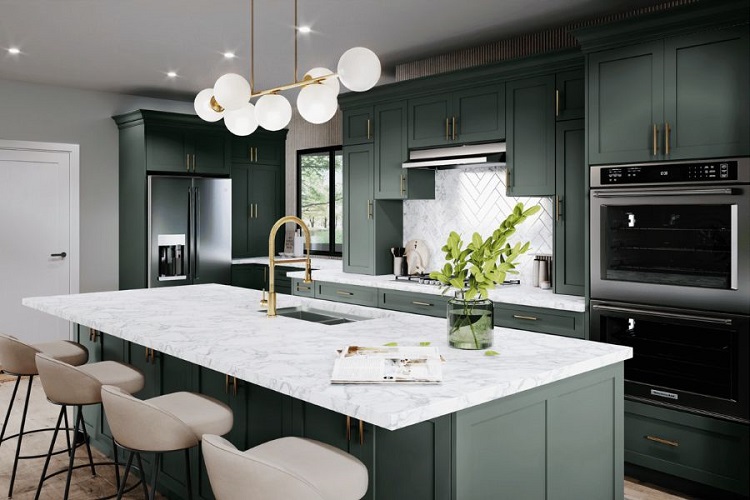
If you're planning a kitchen renovation, one question usually comes before everything else: how much does a kitchen remodel cost?
For homeowners in the U.S., a kitchen remodel can cost anywhere from a relatively modest amount for cosmetic updates to well over $100,000 for a major, high-end renovation. The wide range can be confusing, especially when you're comparing contractor quotes that seem to describe similar projects but carry very different price tags.
A realistic budget depends on much more than the size of the kitchen. Cabinet quality, countertop materials, appliances, electrical work, plumbing, flooring, permits, labor rates, and even your home's location can dramatically affect the final bill.
A small kitchen with stock cabinets and cosmetic improvements may be completed for around $10,000 to $20,000. A mid-range renovation commonly falls somewhere around $25,000 to $50,000, while a large luxury kitchen remodel can reach $75,000, $100,000, or considerably more.
The important thing is to understand where your money is going before demolition begins.
This guide breaks down kitchen remodeling costs, explains what different budgets can realistically buy, and shows where homeowners can save without making decisions that hurt long-term quality or property value.
Average Kitchen Remodel Cost in 2026
There isn't one universal price for a kitchen remodel because every project is different. However, broad U.S. cost ranges can help establish a starting point.
| Kitchen Remodel Level | Typical Cost Range |
|---|---|
| Minor cosmetic update | $10,000–$20,000 |
| Small/mid-range remodel | $20,000–$40,000 |
| Major remodel | $40,000–$75,000 |
| High-end remodel | $75,000–$125,000+ |
| Luxury/custom remodel | $125,000–$200,000+ |
These are planning ranges rather than guaranteed contractor prices.
Your actual cost may be substantially lower or higher depending on labor rates, materials, kitchen size, structural changes, and the condition of the existing home.
For example, replacing cabinet doors and countertops is a completely different project from removing walls, relocating plumbing, upgrading electrical service, installing custom cabinetry, and moving appliances.
What Is the Average Cost to Remodel a Kitchen?
For many U.S. homeowners, a reasonable planning range for a complete mid-range kitchen remodel is approximately $25,000 to $50,000.
That might include:
- New cabinets
- New countertops
- Updated backsplash
- New flooring
- Lighting improvements
- Plumbing fixtures
- Basic appliance upgrades
- Painting
- Labor
A smaller cosmetic renovation could cost considerably less.
On the other hand, homeowners pursuing a luxury kitchen with custom cabinetry, premium building materials, professional-grade appliances, natural stone, extensive electrical work, and structural modifications can quickly exceed $100,000.
The biggest mistake is assuming that the size of the kitchen alone determines the price.
A 100-square-foot kitchen with expensive custom finishes can cost more than a 200-square-foot kitchen using stock cabinetry and standard materials.
Kitchen Remodel Cost by Square Foot
Some contractors and renovation websites estimate kitchen remodeling costs by square foot.
A broad planning range might look like:
- Budget remodel: $100–$150 per square foot
- Mid-range remodel: $150–$250 per square foot
- High-end remodel: $250–$500+ per square foot
However, square-foot pricing can be misleading.
Kitchen renovations contain expensive components that don't necessarily scale directly with floor area.
A 100-square-foot kitchen still needs a refrigerator, sink, electrical system, cabinets, countertop, lighting, and labor. Doubling the kitchen's size doesn't necessarily double the cost of every component.
For that reason, use square-foot estimates as a rough comparison rather than a contractor quote.
Kitchen Remodel Cost by Project Type
One of the easiest ways to understand your budget is to separate a remodel into individual components.
Cabinets
Cabinetry is often the largest single expense in a kitchen remodel.
Typical categories include:
Stock Cabinets
Approximately $4,000–$10,000 installed for many kitchens.
Stock cabinets are manufactured in standard dimensions and are usually the most affordable option.
They're a good choice when:
- You're working with a tight budget.
- Your existing kitchen layout works well.
- You don't need unusual cabinet dimensions.
Semi-Custom Cabinets
Approximately $10,000–$25,000+ installed.
Semi-custom cabinets provide more flexibility in:
- Door styles
- Finishes
- Dimensions
- Storage configurations
- Hardware
They're often the sweet spot for homeowners who want a significant upgrade without paying entirely custom prices.
Custom Cabinets
Custom cabinetry can easily cost $20,000–$50,000 or more.
The price increases because cabinets are designed specifically for the room.
Custom work makes sense when you need:
- Unusual dimensions
- Floor-to-ceiling storage
- Specialty organizers
- Integrated appliances
- High-end wood species
- Detailed architectural features
If you're renovating a luxury property, custom cabinetry can make sense as part of a broader investment in property value and home equity.
Countertops
Countertop prices vary dramatically based on material.
Approximate installed ranges include:
| Countertop Material | Typical Cost |
|---|---|
| Laminate | $20–$50/sq. ft. |
| Butcher block | $40–$100/sq. ft. |
| Granite | $50–$150/sq. ft. |
| Quartz | $60–$150/sq. ft. |
| Premium natural stone | $100–$250+ per sq. ft. |
Quartz remains popular because it's durable and relatively low-maintenance.
Granite appeals to homeowners who prefer natural stone.
Butcher block can provide warmth at a lower price point, although it requires more maintenance.
For a high-end kitchen, countertop selection can represent a surprisingly large percentage of the total remodeling budget.
Appliances
Appliances can consume another major portion of the budget.
A basic appliance package may cost approximately:
$3,000–$7,000
A premium package might cost:
$10,000–$25,000+
Luxury appliances can exceed those numbers significantly.
Common appliances include:
- Refrigerator
- Range or cooktop
- Oven
- Dishwasher
- Microwave
- Range hood
If your existing appliances are relatively new, keeping them can be one of the easiest ways to control renovation costs.
Flooring
Kitchen flooring can range from inexpensive vinyl to premium natural stone.
Typical material costs may include:
- Luxury vinyl: $3–$10/sq. ft.
- Ceramic tile: $5–$15/sq. ft.
- Porcelain tile: $6–$20/sq. ft.
- Hardwood: $8–$20/sq. ft.
- Natural stone: $10–$30+ per sq. ft.
Installation adds additional labor.
If the existing floor is structurally sound, refinishing or overlaying it may be considerably cheaper than replacing it completely.
Backsplash
A backsplash is one area where homeowners can create a dramatic visual improvement without spending an enormous amount.
Typical installed pricing can range from approximately:
$800–$3,500
Premium tile, complex patterns, large-format slabs, and full-height backsplashes can push the cost significantly higher.
A simple subway tile backsplash remains one of the best budget-friendly options.
Plumbing Costs
Moving plumbing is expensive because it involves more than installing a new faucet.
You may need to modify:
- Water supply lines
- Drain pipes
- Dishwasher connections
- Gas lines
- Garbage disposal plumbing
Keeping the sink and major appliances in approximately the same locations can save thousands of dollars.
This is one reason experienced remodeling contractors often recommend changing finishes before changing the fundamental kitchen layout.
Electrical Work
Older homes frequently require electrical upgrades during kitchen remodeling.
Potential work includes:
- New circuits
- GFCI outlets
- Under-cabinet lighting
- Pendant lighting
- Recessed lights
- Appliance circuits
- Electrical panel upgrades
Modern kitchens have significant electrical demands, particularly when homeowners add induction ranges, wall ovens, microwaves, refrigerators, wine coolers, and multiple countertop appliances.
If your home has outdated wiring, this isn't an area where cutting costs makes sense.
Labor Costs
Labor can represent a substantial portion of the total kitchen renovation budget.
Depending on the project, you're potentially paying for:
- General contractor
- Cabinet installer
- Electrician
- Plumber
- Tile installer
- Painter
- Flooring contractor
- Countertop fabricator
- Drywall professional
Complex projects require more coordination, which is another reason contractor quotes can vary substantially.
When comparing quotes, don't automatically choose the lowest number.
Look at what's actually included.
Kitchen Remodeling Cost Breakdown
A typical mid-range kitchen remodel might allocate the budget approximately like this:
| Category | Approximate Share |
|---|---|
| Cabinets | 25–35% |
| Labor | 20–30% |
| Appliances | 10–15% |
| Countertops | 10–15% |
| Flooring | 5–10% |
| Lighting/Electrical | 5–10% |
| Plumbing | 3–8% |
| Paint/Finishing | 2–5% |
These percentages are useful for planning but shouldn't be treated as fixed rules.
For example, a kitchen with $30,000 custom cabinets will have a very different budget structure from one using $7,000 stock cabinets.
What Does a $15,000 Kitchen Remodel Look Like?
A $15,000 renovation usually requires careful prioritization.
You might focus on:
- Cabinet painting
- New hardware
- Affordable countertops
- Updated lighting
- New faucet
- Backsplash
- Fresh wall paint
- Selective appliance replacement
This is more of a kitchen refresh than a full gut renovation.
If the existing cabinets are structurally sound, repainting them can save thousands of dollars.
What Does a $30,000 Kitchen Remodel Include?
At around $30,000, homeowners have considerably more flexibility.
A realistic project could include:
- New semi-custom or quality stock cabinets
- Quartz or granite countertops
- Mid-range appliances
- New backsplash
- Improved lighting
- Updated flooring
- Plumbing fixtures
- Professional installation
Keeping the existing layout is usually important at this budget.
Moving walls, plumbing, and gas lines can quickly consume funds that would otherwise go toward visible improvements.
What Does a $50,000 Kitchen Remodel Look Like?
At approximately $50,000, you can create a substantial transformation.
Depending on local labor rates, this budget may accommodate:
- High-quality cabinetry
- Quartz or premium granite
- Better appliances
- New flooring
- Custom lighting
- Kitchen island
- Improved storage
- Updated electrical
- Plumbing modifications
You may also have room for architectural details such as:
- Coffered ceilings
- Custom range hoods
- Decorative cabinet panels
- Built-in beverage stations
- Under-cabinet lighting
What Does a $100,000 Kitchen Remodel Include?
A $100,000 kitchen renovation typically moves into the high-end category.
It may involve:
- Fully custom cabinets
- Premium countertops
- Professional-grade appliances
- Designer lighting
- Luxury plumbing fixtures
- Custom millwork
- Structural modifications
- High-end flooring
- Extensive electrical and plumbing work
At this level, homeowners often hire architects, interior designers, or specialized kitchen designers.
The goal is no longer simply replacing old finishes. It's creating a highly customized space.
What Makes a Kitchen Remodel More Expensive?
Several factors can push costs substantially higher.
Changing the Layout
Moving the sink, refrigerator, stove, or dishwasher can require plumbing and electrical changes.
Removing Walls
Opening a kitchen to another room may require structural engineering and beam installation.
Custom Cabinets
Custom dimensions and specialty finishes add significant labor.
Premium Materials
Natural stone, imported tile, luxury appliances, and specialty woods can quickly increase the budget.
Older Homes
Older houses may reveal unexpected problems once walls and cabinets are removed.
Potential surprises include:
- Outdated wiring
- Water damage
- Plumbing leaks
- Mold
- Uneven floors
- Structural problems
This is why experienced contractors recommend maintaining a contingency fund.
How Much Should You Set Aside for Unexpected Costs?
A reasonable contingency is approximately 10–20% of your remodeling budget.
For a $40,000 project, that means keeping roughly $4,000–$8,000 available.
Don't think of this as money you're expected to spend.
It's protection against surprises.
For example, if demolition reveals water damage underneath a sink, having a contingency fund prevents the repair from forcing you to eliminate an important part of the remodel.
How to Save Money on a Kitchen Remodel
Saving money doesn't necessarily mean choosing cheap materials.
The smartest savings usually come from reducing unnecessary labor.
Keep the Existing Layout
This is one of the most effective strategies.
Keeping plumbing and electrical locations largely unchanged can dramatically reduce construction costs.
Refinish Existing Cabinets
If the cabinet boxes are structurally sound, painting or refacing can provide a major visual transformation.
Choose Stock Cabinets
Modern stock cabinets can look remarkably sophisticated.
Mix Premium and Budget Materials
Spend more on features you touch and use constantly.
For example:
- Quality countertop
- Good faucet
- Durable cabinet hardware
Then save on decorative elements that can be replaced later.
Keep Appliances That Still Work
There's little reason to replace a perfectly functional refrigerator simply because you're renovating the kitchen.
Where You Shouldn't Cut Costs
Some parts of a kitchen renovation deserve professional attention.
Don't compromise on:
- Electrical safety
- Plumbing
- Structural modifications
- Cabinet installation
- Countertop fabrication
- Waterproofing
- Ventilation
A poorly installed countertop or improperly connected dishwasher can create expensive problems later.
The same principle applies to broader home improvement projects. Whether you're hiring a roofing contractor, scheduling siding replacement, arranging gutter installation, or upgrading windows, workmanship matters as much as the material itself.
Does a Kitchen Remodel Increase Home Value?
A well-planned kitchen renovation can improve both enjoyment and resale appeal.
However, homeowners shouldn't assume they'll recover every dollar spent.
The strongest return typically comes from improvements that match the neighborhood and buyer expectations.
For example, installing a $100,000 luxury kitchen in a modest starter-home neighborhood may not provide the same financial return as a $30,000–$40,000 renovation that brings the property in line with comparable homes.
Think about the neighborhood ceiling.
Your kitchen should feel upgraded without becoming dramatically more expensive than everything around it.
Kitchen Remodeling and Home Equity
Home improvements can contribute to home equity when they increase the property's market value.
Kitchen remodeling can help by:
- Improving buyer appeal
- Modernizing outdated spaces
- Addressing functional problems
- Improving the overall condition of the home
But not every expensive upgrade creates equivalent value.
A practical kitchen with durable materials may appeal to more buyers than an extremely personalized design.
Should You Remodel Before Selling?
That depends on the condition of the existing kitchen and your local market.
If the kitchen is outdated but functional, consider a moderate refresh.
Potential improvements include:
- Cabinet painting
- New hardware
- Updated lighting
- New faucet
- Modern backsplash
- Fresh countertops
If the kitchen has serious functional or structural problems, a larger renovation may be justified.
Before spending heavily, compare your home with recently sold properties in your neighborhood.
How Contractor Quotes Should Be Compared
Getting at least three contractor quotes is a sensible starting point for major renovations.
But don't compare only the final price.
Check whether each quote includes:
- Demolition
- Disposal
- Cabinets
- Countertops
- Installation
- Electrical work
- Plumbing
- Permits
- Flooring
- Painting
- Cleanup
Two contractors may quote $40,000 and $55,000 for what appears to be the same kitchen. Once you examine the scope, you may discover that the cheaper quote excludes several thousand dollars of necessary work.
Ask contractors to provide a detailed scope of work.
Questions to Ask a Kitchen Remodeling Contractor
Before signing a contract, ask:
- Are you licensed and insured where required?
- How long have you been remodeling kitchens?
- Can you provide recent references?
- Who will actually perform the work?
- What is included in the quote?
- How are change orders handled?
- Who obtains permits?
- What happens if hidden damage is discovered?
- What warranty do you provide?
- What is the expected project timeline?
A professional contractor should be comfortable answering these questions.
Common Kitchen Remodeling Mistakes
Underestimating the Budget
The initial estimate isn't necessarily the final cost.
Always maintain a contingency.
Choosing Materials Too Early
Don't purchase cabinets before confirming measurements and layout.
Ignoring Workflow
A beautiful kitchen can still be frustrating if the refrigerator, sink, and cooking area are poorly positioned.
Overbuilding for the Neighborhood
Don't spend luxury-home money unless comparable properties support the investment.
Forgetting Ventilation
A powerful range hood can dramatically improve comfort and indoor air quality.
Neglecting Lighting
Plan for multiple layers:
- Ambient
- Task
- Accent
Focusing Entirely on Appearance
A kitchen needs to function first.
Storage, circulation, appliance placement, and countertop workspace should guide the design.
How Long Does a Kitchen Remodel Take?
A cosmetic update can sometimes be completed in a few weeks.
A major kitchen remodel commonly takes 6–12 weeks, although complex projects can take considerably longer.
Potential delays include:
- Cabinet lead times
- Countertop fabrication
- Permit approval
- Material shortages
- Contractor scheduling
- Unexpected structural repairs
If you're living in the home during construction, discuss the expected timeline before signing the contract.
Should You Hire a General Contractor?
For a simple cabinet painting project, you may not need one.
For a major remodel involving multiple trades, a general contractor can coordinate:
- Electricians
- Plumbers
- Cabinet installers
- Flooring contractors
- Drywall crews
- Painters
This can reduce scheduling problems and make responsibility clearer if something goes wrong.
Kitchen Remodel vs. Other Home Improvements
Homeowners often have a limited renovation budget and must decide where to spend it.
A kitchen remodel may compete with projects such as:
- Roof replacement
- Siding replacement
- Window replacement
- Exterior painting
- Gutter installation
- Landscaping
- Insulation upgrades
The correct priority depends on the condition of your home.
If your roof is leaking, for example, replacing kitchen cabinets should not come first.
Similarly, serious water intrusion, storm damage, or deteriorating siding should be addressed before cosmetic improvements.
An exterior inspection can help identify problems that may otherwise become expensive later.
Kitchen Remodel Cost and Home Insurance
Kitchen remodeling generally doesn't automatically lower home insurance premiums.
However, renovations can affect the amount of coverage you need because improvements increase the value of the property and its contents.
After a major renovation, contact your insurance provider and ask whether your policy adequately reflects the updated home.
This is particularly important after installing expensive cabinetry, premium appliances, natural stone countertops, or other high-value improvements.
Keep receipts, contracts, photographs, and documentation of major renovation work.
Energy Efficiency During a Kitchen Remodel
A kitchen remodel is also an opportunity to improve energy efficiency.
Consider:
- LED lighting
- Energy-efficient appliances
- Induction cooking
- Efficient ventilation
- Improved insulation where walls are opened
- Energy-efficient windows if the kitchen is being expanded
These upgrades may increase upfront costs but can improve long-term comfort and operating expenses.
Is a Kitchen Remodel Worth It?
For many homeowners, yes—but the best projects are carefully planned.
A successful renovation should accomplish at least one of these goals:
- Improve functionality
- Solve storage problems
- Modernize an outdated kitchen
- Improve durability
- Increase buyer appeal
- Increase property value
If the remodel is primarily cosmetic, avoid spending more than the home's market position can support.
Frequently Asked Questions
What is the average cost to remodel a kitchen in 2026?
A typical mid-range kitchen remodel in the U.S. can cost approximately $25,000–$50,000, while smaller updates may cost around $10,000–$20,000 and luxury renovations can exceed $100,000.
What is the cheapest way to remodel a kitchen?
Keeping the existing layout, repainting cabinets, replacing hardware, updating lighting, and choosing cost-effective countertops are among the best ways to reduce remodeling costs.
Is $20,000 enough for a kitchen remodel?
It can be enough for a modest renovation, particularly if you keep the existing layout and reuse cabinets or appliances. A complete high-end remodel would require a substantially larger budget.
Is $30,000 enough to remodel a kitchen?
Yes. A $30,000 budget can support a significant mid-range renovation in many markets, particularly when plumbing, electrical, and structural changes are limited.
How much does a 10x10 kitchen remodel cost?
A 10x10 kitchen may cost approximately $15,000–$40,000 for a modest to mid-range renovation, although premium materials and extensive layout changes can push the price much higher.
How much should I budget for a kitchen remodel?
For a complete renovation, establish a realistic target budget and keep another 10–20% available as a contingency for unexpected costs.
What is the most expensive part of a kitchen remodel?
Cabinetry and labor are frequently among the largest expenses, although custom appliances, countertops, structural modifications, and plumbing changes can significantly increase the total.
Does a kitchen remodel add value to a home?
A well-planned kitchen renovation can improve property value and buyer appeal, but the return depends heavily on the local real estate market, renovation quality, and how much you spend.
Should I remodel my kitchen before selling my house?
Not necessarily. A modest refresh may make sense if the kitchen is visibly outdated, but expensive renovations don't always produce enough additional sale value to justify the cost.
How much does a luxury kitchen remodel cost?
Luxury kitchens commonly start around $75,000 and can exceed $125,000 or $200,000 depending on custom cabinetry, appliances, materials, architectural modifications, and labor.
Final Thoughts
The question "how much does a kitchen remodel cost?" sounds simple, but the answer depends on the decisions behind the project. A modest kitchen refresh may cost around $10,000, while a sophisticated custom renovation can easily exceed $100,000.
The smartest approach isn't necessarily choosing the cheapest option. It's deciding which improvements genuinely matter, establishing a realistic budget, keeping a contingency for unexpected problems, and getting detailed contractor quotes before work begins.
For most homeowners, preserving the existing kitchen layout is one of the easiest ways to control costs. Put your money into durable cabinets, quality countertops, reliable appliances, good lighting, and professional workmanship rather than spending heavily on features that don't improve how the kitchen functions.
And remember that the kitchen is only one part of your home's overall investment. If the property also needs a roof replacement, siding work, energy-efficient windows, gutter installation, exterior painting, waterproofing, or storm damage repair, prioritize structural and water-related problems first.
A well-planned kitchen remodel should make the house easier to live in today while supporting its long-term property value. Done correctly, it isn't simply an expensive makeover. It's an investment in functionality, comfort, home equity, and the future marketability of the property.