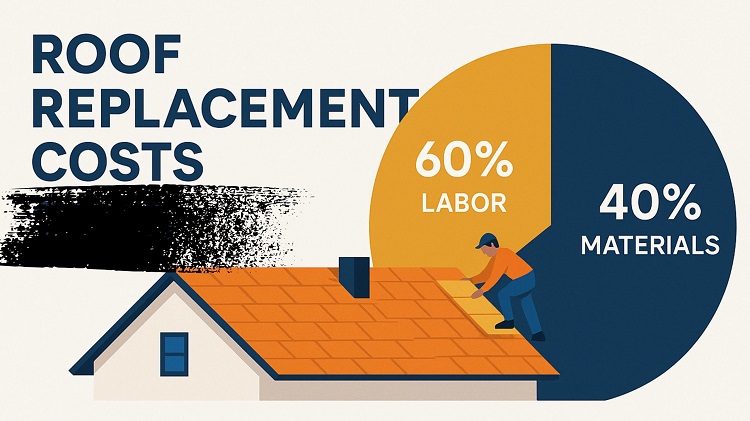
Replacing the roof on a 2,500-square-foot house is one of the largest home improvement investments most homeowners will ever make. While many people search for a single price, the reality is that roofing costs depend on several factors, including the roofing material, roof complexity, labor rates, location, and whether the existing roof must be removed before installation.
Understanding these variables can help you create a realistic budget, compare contractor estimates confidently, and choose a roofing system that provides long-term value rather than simply the lowest upfront cost.
This guide explains the average cost to replace a roof on a 2,500 sq ft house, what affects pricing, financing options, insurance considerations, maintenance practices, and common mistakes to avoid before signing a roofing contract.
Understanding Roof Size vs. House Size
One of the biggest misconceptions is assuming a 2,500 sq ft home automatically has a 2,500 sq ft roof.
In reality, roof area is usually larger because of:
- Roof pitch (steeper roofs require more materials)
- Overhangs
- Dormers
- Valleys
- Multiple stories
- Architectural design
For example:
| Home Size | Estimated Roof Size |
|---|---|
| 2,500 sq ft single-story ranch | 2,700–3,200 sq ft |
| 2,500 sq ft two-story home | 1,500–2,000 sq ft per footprint but total roof typically 2,000–2,800 sq ft depending on design |
| Complex custom home | Often exceeds 3,200 sq ft |
Professional roofing contractors measure roofs using roof squares, where one roofing square equals 100 square feet.
A typical replacement for a 2,500 sq ft home often ranges between 25 and 35 roofing squares, depending on the home's architecture.
Average Cost to Replace Roof on a 2,500 Sq Ft House
The total cost varies primarily by roofing material.
| Roofing Material | Typical Installed Cost |
|---|---|
| Asphalt shingles | $9,000–$18,000 |
| Architectural shingles | $12,000–$22,000 |
| Metal roofing | $18,000–$40,000+ |
| Cedar shake | $22,000–$45,000+ |
| Clay tile | $30,000–$60,000+ |
| Concrete tile | $25,000–$55,000+ |
| Natural slate | $40,000–$80,000+ |
These estimates typically include:
- Removal of old roofing (if required)
- Underlayment
- Flashing replacement
- Standard ventilation improvements
- Labor
- Disposal fees
Costs increase when significant structural repairs are discovered after the old roof is removed.
Roofing Material Comparison
| Material | Lifespan | Maintenance | Initial Cost | Best For |
|---|---|---|---|---|
| 3-tab asphalt | 15–20 years | Low | Lowest | Budget-conscious homeowners |
| Architectural asphalt | 25–30+ years | Low | Moderate | Most residential homes |
| Metal | 40–70 years | Low | Higher | Long-term ownership |
| Cedar shake | 25–40 years | Moderate | High | Traditional appearance |
| Concrete tile | 50+ years | Moderate | High | Warm climates |
| Clay tile | 50–100 years | Moderate | Very High | Mediterranean architecture |
| Slate | 75–150+ years | Low | Premium | Luxury homes |
Major Factors That Affect Roof Replacement Cost
Roof Complexity
Simple gable roofs cost less than complex roof systems with multiple:
- Valleys
- Dormers
- Skylights
- Chimneys
- Intersecting rooflines
Each feature increases labor time.
Roof Pitch
Steep roofs require:
- Additional safety equipment
- More labor hours
- Specialized installation techniques
Steeper roofs generally cost more to replace.
Existing Roof Layers
Many homes have multiple roofing layers.
Removing additional layers increases:
- Labor
- Dumpster fees
- Disposal costs
Roof Deck Repairs
Once shingles are removed, contractors inspect the roof decking.
Damaged plywood or oriented strand board (OSB) may need replacement due to:
- Water damage
- Rot
- Mold
- Structural deterioration
These repairs are usually priced separately because they cannot be confirmed until the roof is exposed.
Geographic Location
Roofing prices vary significantly due to:
- Local labor costs
- Material transportation
- Building permit fees
- Climate
- Regional demand
Storm-prone areas often experience higher labor rates after severe weather events because contractor demand increases.
Roofing Accessories
Additional components often replaced include:
- Ridge vents
- Pipe boots
- Chimney flashing
- Drip edge
- Ice and water shield
- Gutters
- Skylight flashing
Although individually inexpensive, these items can collectively affect the total project cost.
Typical Roof Replacement Process
A professional roof replacement generally follows these steps:
- Roof inspection
- Written estimate
- Material selection
- Permit acquisition (where required)
- Delivery of materials
- Removal of old roofing
- Deck inspection
- Structural repairs if necessary
- Installation of underlayment
- Flashing installation
- Roofing installation
- Ventilation improvements
- Final inspection
- Site cleanup
- Warranty documentation
Many standard residential asphalt shingle roofs can be completed in one to three days, though larger or more complex roofs may take longer depending on weather and project scope.
Cost Breakdown Example
The following table illustrates how project costs are commonly distributed.
| Project Component | Typical Share of Budget |
|---|---|
| Roofing materials | 30–45% |
| Labor | 35–50% |
| Tear-off and disposal | 5–15% |
| Flashing and accessories | 5–10% |
| Permits and inspections | Small percentage |
| Unexpected repairs | Variable |
Asphalt vs. Metal Roofing
| Feature | Asphalt | Metal |
|---|---|---|
| Initial investment | Lower | Higher |
| Lifespan | Shorter | Longer |
| Maintenance | Low | Low |
| Wind resistance | Good | Often excellent depending on system |
| Fire resistance | Varies by assembly | Generally excellent for metal roofing materials |
| Energy performance | Depends on product | Reflective options available |
Homeowners planning to stay in their homes for decades often compare lifetime ownership costs rather than installation cost alone.
Financing a Roof Replacement
Because roof replacement is a major investment, many homeowners explore financing options.
Common choices include:
- Home equity loans
- Home equity lines of credit (HELOCs)
- Cash savings
- Contractor financing (where available)
- Personal loans
- FHA Title I property improvement loans (for eligible borrowers)
- Cash-out refinancing in certain circumstances
Before financing, compare:
- Interest rates
- Loan terms
- Fees
- Monthly payments
- Prepayment penalties
If your roof replacement is part of a broader renovation project, reviewing guidance from the U.S. Department of Housing and Urban Development (HUD) and the Federal Housing Administration (FHA) can help you understand available home improvement financing programs and eligibility requirements.
Will Homeowners Insurance Pay for a New Roof?
Insurance coverage depends on why the roof needs replacement.
Coverage is commonly available when damage results from a covered peril, such as:
- Hail
- Windstorms
- Falling trees
- Fire
Insurance generally does not cover replacement due solely to:
- Normal aging
- Lack of maintenance
- Gradual deterioration
- Wear and tear
If storm damage occurs:
- Document the damage with photographs.
- Contact your insurer promptly.
- Avoid permanent repairs before an adjuster inspects the roof unless emergency measures are necessary to prevent further damage.
- Keep receipts for temporary protective repairs if your policy allows reimbursement.
Choosing the Right Roofing Contractor
Selecting a qualified contractor is often more important than selecting a specific roofing material.
Look for contractors who provide:
- Written estimates
- Detailed project scope
- Proof of licensing where required
- General liability insurance
- Workers' compensation coverage when applicable
- Manufacturer certifications (if available)
- Clear warranty documentation
- Local references
Avoid contractors who:
- Demand full payment upfront
- Refuse written contracts
- Offer unusually low bids
- Pressure immediate decisions
- Cannot verify insurance coverage
The National Roofing Contractors Association (NRCA) recommends obtaining multiple written estimates and understanding exactly what is included before making a hiring decision.
Roof Maintenance Checklist
Routine maintenance helps maximize roof life.
Twice Per Year
- Inspect shingles from the ground.
- Remove leaves and debris.
- Clean gutters.
- Check attic for leaks.
- Inspect flashing.
- Trim overhanging branches.
After Major Storms
- Look for missing shingles.
- Check for fallen tree limbs.
- Inspect flashing around chimneys.
- Examine gutters for roofing granules.
- Schedule a professional inspection if damage is suspected.
Common Mistakes Homeowners Make
Avoid these common roofing mistakes:
- Choosing the lowest bid without comparing scope of work
- Ignoring attic ventilation
- Delaying replacement after widespread leaks appear
- Overlooking warranty details
- Failing to verify contractor credentials
- Not budgeting for potential deck repairs
- Skipping multiple estimates
- Assuming insurance automatically covers an aging roof
Long-Term Value of Roof Replacement
A new roof offers benefits beyond stopping leaks.
Potential advantages include:
- Better weather protection
- Improved curb appeal
- Increased buyer confidence during resale
- Reduced likelihood of water damage
- Opportunity to improve attic ventilation
- Compatibility with newer, more durable roofing materials
- Potential energy savings when selecting qualifying cool-roof products in appropriate climates
Proper installation remains one of the most important factors influencing roof performance and service life.
Frequently Asked Questions
How much does it usually cost to replace a roof on a 2,500 sq ft house?
For many homes, asphalt shingle roof replacement falls roughly between $9,000 and $18,000, while premium materials such as metal, tile, or slate can cost substantially more depending on roof size, design complexity, and regional labor rates.
How long does roof replacement take?
Many standard residential projects are completed within one to three days, although weather, roof complexity, repairs, and material availability can extend the schedule.
Can I install a new roof over existing shingles?
Some jurisdictions and manufacturers allow limited overlay installations under specific conditions. However, a complete tear-off is often recommended because it allows inspection of the roof deck and correction of hidden damage. Local building codes and manufacturer installation instructions should always be followed.
Is metal roofing worth the extra cost?
For homeowners planning long-term ownership, metal roofing may provide value through its extended lifespan, durability, and relatively low maintenance requirements. Whether it is cost-effective depends on your budget, climate, and expected time in the home.
Should I replace gutters at the same time?
Not always, but replacing or repairing gutters during a roof replacement can improve efficiency and may reduce labor costs if both projects are coordinated.
Does replacing a roof increase home value?
A new roof can improve marketability and buyer confidence, though the exact return on investment varies by housing market, roof condition, and material selection.
Conclusion
The average cost to replace a roof on a 2,500 sq ft house depends on far more than the home's floor area. Roofing material, roof geometry, labor costs, tear-off requirements, and any underlying structural repairs all contribute to the final price.
Homeowners who take time to compare detailed estimates, verify contractor qualifications, understand warranty coverage, and choose materials suited to their climate are more likely to receive lasting value from their investment.
Consulting guidance from organizations such as the NRCA, HUD, FHA, the International Code Council (ICC), and ENERGY STAR can also help ensure your roofing project aligns with recognized industry practices and long-term performance goals.